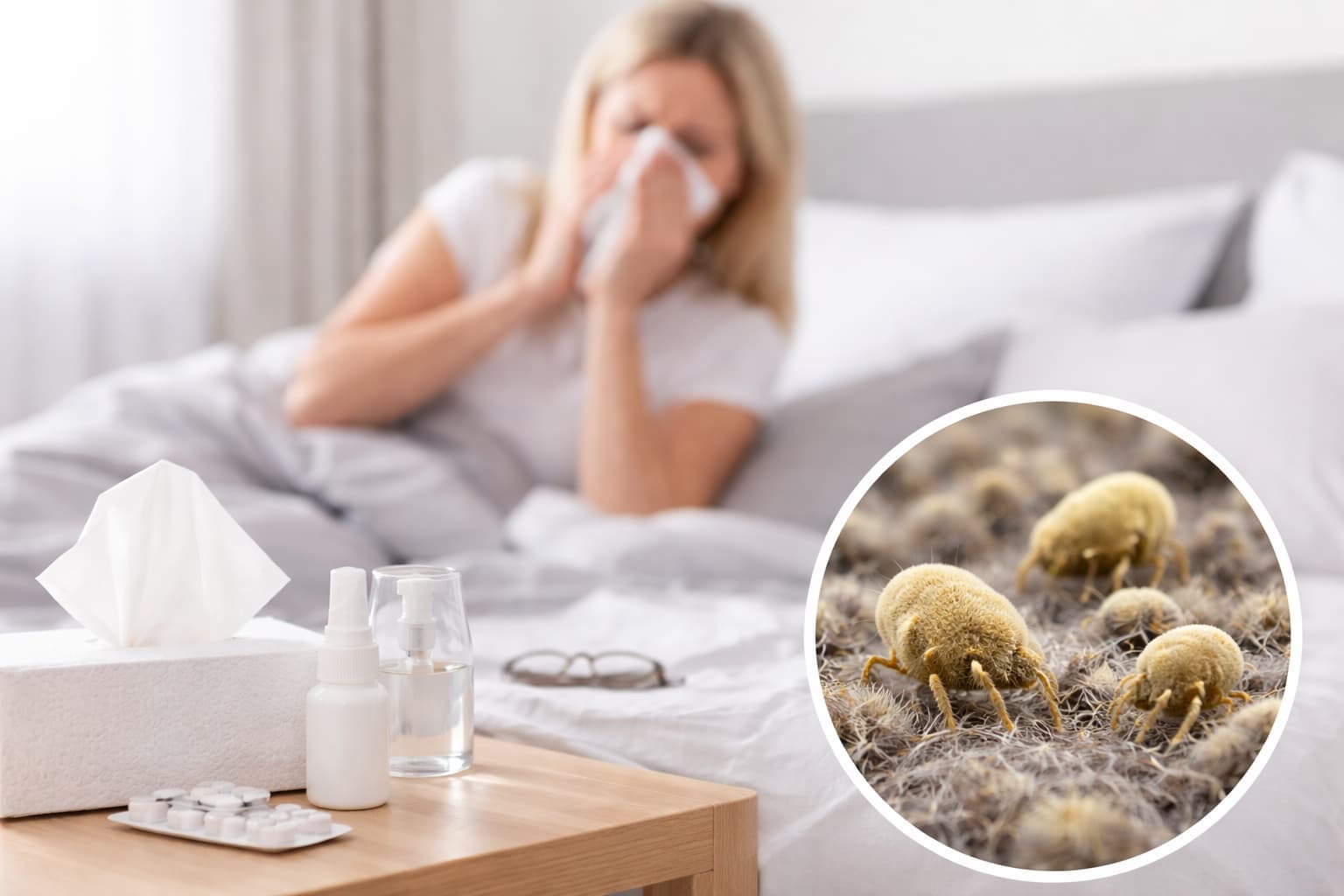
Common Signs of a Dust Mite Allergy and How to Deal With It
Dust mite allergy is one of the most common indoor allergies in the UK. Unlike seasonal allergies such as hay fever — which tend to flare during the pollen months — dust mite allergy can cause symptoms throughout the entire year. This is because house dust mites thrive in warm, humid indoor environments and are present in virtually every home, regardless of how clean it is. For many people, the signs of a dust mite allergy overlap with those of a common cold or other respiratory conditions, which can make it difficult to identify what is actually causing the problem. Symptoms such as a blocked nose, sneezing, and itchy eyes may come and go or persist at a low level for months without an obvious explanation. This article provides general information about the most common signs of a dust mite allergy, why symptoms are often worse in certain environments, and practical strategies for reducing exposure at home. It is not intended as a diagnosis. If you are experiencing persistent symptoms that are affecting your daily life, it is advisable to seek professional assessment from a pharmacist, GP, or other qualified healthcare professional.
Quick Overview — The Most Common Signs
Common signs of a dust mite allergy include:
- Frequent sneezing, particularly in the morning or when in bed
- A runny or persistently blocked nose
- Itchy, watery, or red eyes
- Cough or wheeze, especially at night
- Eczema flare-ups or worsening of existing skin conditions
- Symptoms that are worse at night, first thing in the morning, or during cleaning If these symptoms sound familiar and seem to persist year-round rather than following a seasonal pattern, dust mite sensitisation may be worth considering as a possible contributing factor.
What Are Dust Mites and Why Do They Trigger Allergy?
House dust mites are microscopic organisms — typically around 0.2 to 0.3 millimetres in size — that feed primarily on shed human skin cells. They are found in virtually every home in the UK, with the highest concentrations typically in bedding, mattresses, pillows, upholstered furniture, and carpets. Dust mites are not visible to the naked eye and are not a sign of poor hygiene. The allergy itself is not caused by the mites directly, but by proteins found in their droppings, body fragments, and secretions. When these microscopic particles become airborne — for example, during bed-making, vacuuming, or moving cushions — they can be inhaled or come into contact with the skin and eyes. In people who are sensitised, the immune system treats these proteins as a threat and produces an antibody called immunoglobulin E (IgE). This triggers the release of histamine and other chemicals, which cause the familiar symptoms of allergic rhinitis, eye irritation, and in some cases, skin flares. Because dust mites are present year-round in indoor environments, the resulting allergy is sometimes described as perennial allergic rhinitis — meaning it can occur at any time of year rather than being limited to a specific season. However, many people notice that symptoms fluctuate. They may worsen during the autumn and winter months when windows tend to be closed and heating is used more frequently, creating warmer and more humid conditions that suit dust mites. It is important to note that dust mites cannot be completely eliminated from a home. However, exposure to the allergen particles they produce can be significantly reduced through practical measures — which are discussed later in this article.
Detailed Signs of a Dust Mite Allergy
Nasal and Sinus Symptoms
Nasal symptoms are among the most frequently reported signs of a dust mite allergy. Many people experience a persistently blocked or stuffy nose that does not seem to clear up fully, even outside of the traditional cold and flu season. Frequent sneezing — sometimes in rapid bursts — is also common, and a clear, watery nasal discharge may be present. These symptoms are characteristic of allergic rhinitis and are driven by the inflammatory response triggered by inhaling dust mite allergen particles. Unlike a typical cold, which usually resolves within seven to ten days, nasal symptoms caused by dust mite allergy tend to persist or recur in a pattern. Many people notice that symptoms are worst first thing in the morning after a night spent in close contact with bedding, or during and after household cleaning activities such as vacuuming, dusting, or changing bed sheets. In some individuals, prolonged nasal inflammation associated with dust mite allergy can contribute to sinus pressure, post-nasal drip, and a reduced sense of smell. If nasal symptoms are persistent and affecting your quality of life, it is worth discussing them with a healthcare professional to explore the possible causes and management options.
Eye Irritation
Itchy, watery, or red eyes are another common sign of dust mite sensitisation. This is sometimes referred to as allergic conjunctivitis and occurs when allergen particles come into contact with the delicate membranes of the eyes. People may notice that their eyes feel gritty, sore, or swollen — particularly in the morning or after time spent in rooms with heavy soft furnishings. Eye symptoms can be particularly noticeable when making the bed, fluffing pillows, or disturbing cushions, as these actions release allergen particles into the air. The urge to rub the eyes is common but can make symptoms worse by increasing irritation. Cool compresses and avoiding touching the eye area may provide some relief, and antihistamine eye drops are available from pharmacies for those who find symptoms troublesome.
Cough, Wheeze and Asthma Link
Dust mite allergy is recognised as one of the most common triggers for asthma symptoms in the UK, particularly in children and young adults. People who are sensitised to dust mites may experience coughing, wheezing, chest tightness, or shortness of breath — especially at night or early in the morning. These symptoms can range from mild and occasional to more persistent and disruptive. In individuals with diagnosed asthma, dust mite exposure can contribute to flare-ups and may make it more difficult to keep symptoms well controlled. Research suggests that a significant proportion of people with asthma in the UK are sensitised to house dust mites, although sensitisation alone does not necessarily mean dust mites are the primary trigger for every individual. If you are experiencing a new or worsening cough, wheeze, or any difficulty breathing, it is important to seek medical assessment. These symptoms should not be self-diagnosed as allergy-related without appropriate professional evaluation, as they can also be caused by other conditions.
Skin and Eczema Flare-Ups
There is a well-recognised association between dust mite allergy and eczema (atopic dermatitis). In some people, exposure to dust mite allergens can contribute to eczema flare-ups, causing patches of itchy, red, dry, or cracked skin to develop or worsen. This is particularly relevant in children, where both eczema and dust mite sensitisation are relatively common. The skin flares associated with dust mite exposure may affect areas such as the inner elbows, behind the knees, the face, and the hands, although they can appear anywhere on the body. The relationship between dust mites and eczema is complex — eczema is influenced by multiple factors including genetics, skin barrier function, and other environmental triggers. However, reducing dust mite exposure is sometimes recommended as part of a broader management strategy for people whose eczema appears to be influenced by indoor allergens. If eczema is a persistent concern, assessment by a dermatologist or other qualified healthcare professional can help identify contributing factors and develop a suitable care plan.
Dust Mite Allergy vs Cold — How to Tell the Difference
One of the most common sources of confusion is the overlap between the symptoms of dust mite allergy and those of a common cold. Both can cause sneezing, a runny or blocked nose, and general discomfort — but there are some differences that may help you distinguish between the two. A cold is caused by a viral infection and typically follows a recognisable pattern. Symptoms usually develop over one to two days, peak around day three or four, and then gradually improve over the course of a week to ten days. A cold may also be accompanied by a sore throat, mild body aches, and sometimes a low-grade fever — symptoms that are not typically associated with allergy. Dust mite allergy symptoms, by contrast, tend to persist for weeks or months at a time, often without a clear start or end point. They are usually most noticeable in specific environments (particularly the bedroom) or after certain activities (such as cleaning or bed-making). Itchiness — of the nose, eyes, throat, or skin — is often more prominent in allergic rhinitis than in a cold. The nasal discharge in allergy tends to be clear and watery, whereas a cold may produce thicker, discoloured mucus as it progresses. It is worth noting that these differences are general guides, not definitive rules. There is genuine overlap between the two, and it is entirely possible to have both at the same time. If you are unsure whether your symptoms are caused by allergy, infection, or something else, a healthcare professional can help assess the situation and advise on appropriate next steps.
Why Symptoms Are Often Worse at Night
Many people with a dust mite allergy notice that their symptoms are most troublesome at night or first thing in the morning. This is a common pattern and is largely explained by the environment in which we sleep. Mattresses, pillows, and duvets are among the most concentrated sources of dust mite allergens in any home. Over time, these items accumulate significant numbers of dust mites and their allergenic particles. When you lie in bed, you are in close and prolonged contact with this material — often for seven to nine hours at a stretch. Body heat and moisture from breathing and perspiration also create a warm, humid microenvironment that is ideal for dust mites to thrive. The enclosed nature of the sleeping environment means that allergen particles released from bedding are concentrated in the air around your face and nose, increasing the level of exposure. This is why many people with dust mite allergy experience their worst nasal congestion, sneezing, or coughing when they wake up, and why symptoms may improve somewhat during the day when they move to other environments. Addressing bedding exposure is often considered the most impactful single step for people looking to reduce dust mite allergy symptoms — and practical strategies for doing so are outlined below.
How to Deal With Dust Mite Allergy at Home
While dust mites cannot be completely eliminated from any home, there are a number of evidence-based practical measures that can help reduce exposure to the allergen particles they produce. These steps are not guaranteed to resolve symptoms entirely, but many people find that a consistent approach to allergen reduction makes a meaningful difference.
Bedroom-First Strategy
Because the bedroom is typically the area with the highest dust mite concentrations, this is generally the most effective place to start. Encasing your mattress, pillows, and duvet in allergen-proof barrier covers can significantly reduce direct contact with mite particles. These covers work by creating a physical barrier between you and the allergens trapped within the bedding. Look for covers specifically designed for allergy management, as standard mattress protectors may not be fine enough to block dust mite allergens. Washing all bed linen — including sheets, pillowcases, and duvet covers — at a temperature of 60°C or above is recommended, as this temperature is sufficient to kill dust mites and remove the allergen particles they produce. Washing at lower temperatures will clean the fabric but may not effectively deal with the mites themselves. Aim to wash bedding at least every one to two weeks. Reducing the number of soft furnishings in the bedroom can also help. Cushions, soft toys, heavy curtains, and thick carpets can all harbour dust mites. Replacing carpet with hard flooring where possible, choosing blinds over heavy curtains, and keeping soft toys to a minimum (or washing them regularly at 60°C) are all practical steps that may reduce overall allergen levels in the sleeping environment.
Cleaning Strategies
Regular cleaning can help keep dust mite allergen levels down, but the method matters. Dry dusting and sweeping can actually make things worse by disturbing allergen particles and dispersing them into the air, where they can be inhaled. Damp dusting — using a slightly wet cloth — is generally more effective, as it captures particles rather than spreading them. When vacuuming, using a vacuum cleaner fitted with a HEPA (High Efficiency Particulate Air) filter can help trap fine allergen particles that a standard vacuum might recirculate into the room. Vacuuming regularly — particularly carpeted areas, upholstered furniture, and mattresses — is a useful part of an overall allergen reduction strategy, although vacuuming alone is unlikely to remove all dust mite allergens from deep within fabrics.
Humidity Control
Dust mites thrive in environments where the relative humidity is above 50 per cent. Keeping indoor humidity at around 50 per cent or below can create conditions that are less favourable for dust mite populations. This can be achieved through good ventilation — opening windows where practical, using extractor fans in kitchens and bathrooms, and avoiding drying laundry on radiators or indoor clothes racks. A hygrometer (available from most hardware shops) can help you monitor indoor humidity levels. In particularly damp homes, a dehumidifier may be a useful investment. It is worth noting, however, that completely preventing dust mites through humidity control alone is not realistic — these measures are most effective when used alongside other allergen reduction strategies.
Symptom Relief Options (General Information Only)
A range of over-the-counter treatments are available from UK pharmacies that may help manage the symptoms of dust mite allergy. These are outlined below for general information. This is not a recommendation to take any specific medicine, and you should always follow the product instructions and seek pharmacist or clinician advice if you are unsure. Non-sedating (non-drowsy) antihistamines — such as cetirizine, loratadine, and fexofenadine — are commonly used to help manage symptoms of allergic rhinitis including sneezing, a runny nose, and itchy eyes. These medicines work by blocking the action of histamine, the chemical released during an allergic reaction. They are generally taken once daily. Corticosteroid nasal sprays may be helpful for managing nasal congestion and inflammation. These sprays work by reducing swelling in the nasal passages and are often recommended for people whose nasal symptoms are not adequately controlled by antihistamines alone. They are available over the counter from pharmacies, and a pharmacist can advise on how to use them correctly. Saline nasal rinses — using a simple saltwater solution — can help clear mucus and allergen particles from the nasal passages. These are generally well tolerated and can be used alongside other treatments. Ready-made saline rinse kits are available from pharmacies. Always follow the product instructions and seek pharmacist or clinician advice if you are unsure about the suitability of any treatment. Do not exceed recommended doses without professional guidance.
When to Seek Medical Advice
While many people manage dust mite allergy symptoms effectively with environmental measures and over-the-counter treatments, there are situations where professional medical assessment is advisable. You should consider seeking advice from a GP or other healthcare professional if your symptoms are persistent and are not improving with self-care measures, if your symptoms are significantly affecting your sleep or daily activities, or if you are unsure whether your symptoms are caused by allergy or another condition. A healthcare professional can help assess the situation and advise on further management options. Seek urgent medical attention immediately — by calling 999 or attending A&E — if you experience any of the following:
- Difficulty breathing, wheezing, or feeling unable to get enough air
- Severe tightness in the chest
- Swelling of the lips, tongue, or throat
- Collapse, feeling faint, or losing consciousness These symptoms may indicate a severe allergic reaction and require immediate emergency care. If you have an adrenaline auto-injector, use it as directed and call for help. Do not delay seeking assistance.
Can Testing Help Confirm Dust Mite Sensitisation?
If you have been experiencing symptoms that you suspect may be related to dust mites but have not been able to confirm this, allergy blood testing may be a useful step. Symptoms alone are not always specific enough to identify a particular trigger — many of the signs of dust mite allergy overlap with those of other conditions including colds, non-allergic rhinitis, and sensitivities to other indoor allergens such as pet dander or mould. A specific IgE blood test measures whether your immune system has produced antibodies in response to a particular allergen — in this case, house dust mite proteins. A positive result indicates sensitisation, meaning your immune system has recognised and responded to the allergen. However, it is important to understand that sensitisation does not always equate to clinical allergy. Results are most meaningful when interpreted alongside your symptom history, exposure patterns, and clinical context — ideally with input from a qualified healthcare professional. One advantage of blood-based IgE testing is that it is not typically affected by antihistamine use. Unlike skin prick tests, which require you to stop taking antihistamines beforehand, a blood test can generally be carried out while you continue taking your usual medicine.
What a Nurse-Led Allergy Blood Test Involves
Our clinic provides nurse-led venous blood sample collection. A trained nurse takes a venous blood sample — similar to a standard blood test you might have at a GP surgery or hospital. The sample is then sent to an accredited laboratory for analysis, where specific IgE levels are measured against a panel of allergens that may include house dust mites alongside other common indoor and outdoor triggers. Results are delivered securely to you once laboratory analysis is complete. The results may be shared with your GP or another appropriate healthcare professional to support further assessment and management decisions. Our clinic provides nurse-led venous blood sample collection. Samples are sent to a laboratory for analysis, and results are delivered securely to you. We do not provide diagnosis, prescriptions or emergency care. View our allergy blood tests . It is important to be clear about what our service does and does not include. We do not provide a diagnosis through this website or through the test itself. We do not prescribe medication, provide GP consultations, or offer immunotherapy or other treatment services. The test results provide information about allergic sensitisation, which can then be discussed with your own healthcare professional as part of a broader clinical assessment.
Frequently Asked Questions
Can dust mite allergy cause eczema?
Dust mite allergy does not directly cause eczema, but in some people it can contribute to eczema flare-ups. Research has identified an association between dust mite sensitisation and worsening of atopic dermatitis, particularly in children. Reducing dust mite exposure may form part of a broader eczema management plan, although eczema is influenced by many factors and allergen avoidance alone may not be sufficient.
Why are my symptoms worse in the morning?
Morning symptoms are a hallmark of dust mite allergy. During the night, you are in close and prolonged contact with mattress, pillow, and duvet — all of which can harbour high concentrations of dust mite allergen particles. By morning, cumulative exposure over several hours may result in nasal congestion, sneezing, and eye irritation that is more noticeable than at other times of day.
Do air purifiers help with dust mite allergy?
Air purifiers fitted with HEPA filters can help capture airborne allergen particles, which may provide some benefit for people with dust mite allergy. However, most dust mite allergens settle on surfaces (bedding, carpets, upholstery) rather than remaining airborne for long periods. An air purifier is most likely to be helpful as part of a broader allergen reduction strategy rather than as a standalone measure.
What temperature kills dust mites?
Washing bedding and fabrics at a temperature of 60°C or above is generally considered sufficient to kill house dust mites and remove the allergen particles they produce. Washing at lower temperatures will clean the fabric but may not effectively deal with the mites themselves. Items that cannot be washed at 60°C can sometimes be placed in a freezer for 24 hours to kill the mites, although the allergen particles will still need to be washed away afterwards.
Can dust mite allergy trigger asthma?
Dust mite allergens are recognised as a common trigger for asthma symptoms, particularly in people who are sensitised. Exposure can contribute to coughing, wheezing, chest tightness, and shortness of breath. In individuals with diagnosed asthma, reducing dust mite exposure may form part of an overall asthma management plan. If you are experiencing breathing difficulties, it is important to seek medical assessment rather than self-diagnosing.
Can dust mites be completely removed from a home?
In practice, it is not possible to completely eliminate dust mites from any home. They are present in virtually all indoor environments and reproduce in bedding, carpets, and soft furnishings regardless of cleaning standards. However, the level of allergen exposure can be significantly reduced through measures such as allergen-proof covers, washing bedding at 60°C, HEPA vacuuming, humidity control, and reducing soft furnishings in key areas like the bedroom.
What does a dust mite allergy blood test show?
A specific IgE blood test for dust mites measures the level of IgE antibodies your immune system has produced in response to dust mite proteins. A raised level indicates sensitisation — meaning your body has recognised the allergen and mounted an immune response. However, sensitisation does not always equate to clinical allergy. Results should be interpreted alongside your symptoms and clinical history, ideally with input from a healthcare professional.
Is dust mite allergy common in the UK?
Yes, dust mite allergy is one of the most common perennial allergies in the UK. The UK's relatively mild, damp climate provides conditions that are well suited to dust mite populations, and studies suggest that a significant proportion of people with allergic rhinitis and asthma in the UK are sensitised to house dust mites. Sensitisation rates tend to be higher in areas with older housing stock and higher indoor humidity levels.
References
NHS — "House dust mite allergy" (NHS patient information)
Allergy UK — "House dust mite allergy" (patient factsheet)
NICE Clinical Knowledge Summaries — "Allergic rhinitis"
British Society for Allergy and Clinical Immunology (BSACI) — guidelines on allergen avoidance
British National Formulary (BNF) — antihistamine monographs (general pharmacological reference)**